
%20What%20It%20Changes%20for%20Growing%20Businesses.webp)
December 19, 2025
Why IT Support Becomes a Business Decision
On-Demand IT: Reactive by Design
Complete IT (Fully Managed IT): A Shift to Ownership and Structure
The Day-to-Day Impact on Teams and Real Productivity Difference for Teams
Cost: Reactive Spend vs Operational Control
Where Self-Service Fits (And Where It Shouldn’t)
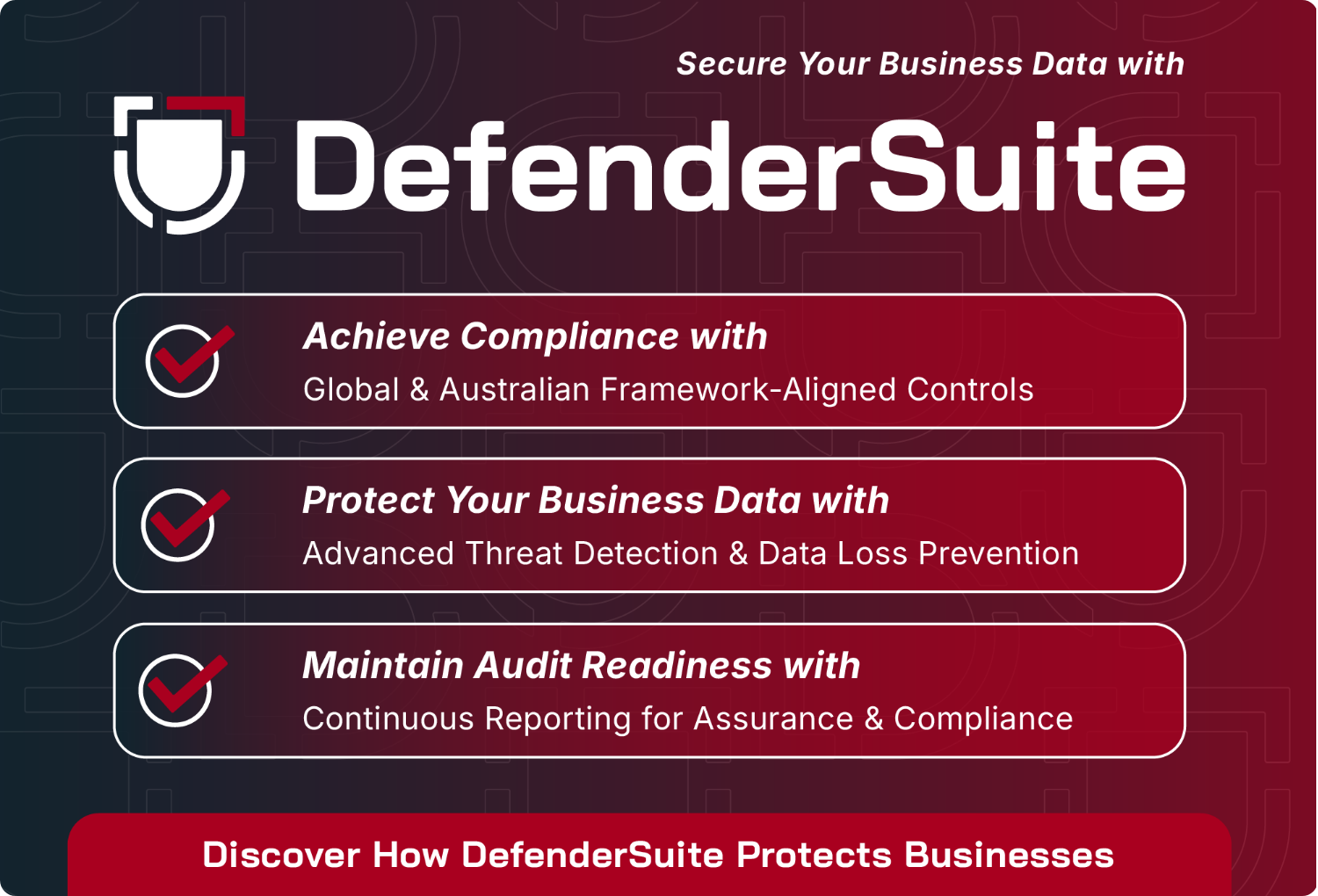
Where DefenderSuite Complements IT Support
When Businesses Outgrow On-Demand IT
A Simple Leadership Test: Is Your IT Model Holding You Back?
Most businesses begin with IT support that is reactive by design. Something breaks, productivity stalls, and support is engaged to restore service.
In the early stages, this On-Demand IT model can work well enough. Systems are simple, teams are small, and technology hasn’t yet become deeply embedded in day-to-day operations.
As businesses grow, however, the role IT plays changes. Technology becomes operationally critical, staff expectations rise, and interruptions carry real cost. At that point, how IT is supported becomes just as important as whether issues can be fixed.
Understanding the difference between On-Demand IT and Complete IT (fully managed IT) helps business leaders make informed decisions about stability, productivity and long-term cost control.
IT support is often treated as a technical concern until it begins to affect the business in measurable ways.
Lost time, repeated issues, inconsistent setups and slow resolution all reduce productivity. Individually, these disruptions may seem minor. Over time, however, they compound — not because incidents are catastrophic, but because friction becomes part of normal operations.
At a certain point, IT support stops being a background service and becomes a business enabler or a constraint, depending on how it is delivered.
For leadership teams, this is where IT shifts from an operational expense to a strategic decision.
On-Demand IT is built around responsiveness, not continuity. Support is engaged when something breaks, billed per request or per hour, and disengaged once the immediate issue is resolved.
This works when technology is peripheral to the business. However, as systems become central to daily operations, the limitations of this model begin to surface — not because support is ineffective, but because no one is incentivised to think beyond the immediate problem.
In a reactive model:
Over time, this creates a pattern where the business is technically supported, but operationally unmanaged.
The real cost of On-Demand IT is rarely the invoice. It is the accumulation of small inefficiencies that never quite justify a project, but quietly reduce productivity:
Responsibility for the overall environment remains with the business by default — even when execution is outsourced. There is usually no clear ownership of system health, standardisation, or long-term improvement.
This accountability gap is subtle at first. As the business grows, it becomes increasingly expensive to carry.
Fully managed IT — referred to at Superior IT as Complete IT — changes the operating model, not just the billing structure.
The defining difference is ownership. Instead of responding to isolated incidents, Complete IT treats the environment as a system that must be kept stable, predictable and fit for purpose over time.
This shift has practical implications for how IT work is prioritised and delivered.
With Complete IT (fully managed IT):
Because responsibility for the environment is clearly defined, improvements that would never be actioned in a reactive model — documentation, standardisation, lifecycle planning — become part of normal operations.
For leadership teams, the benefit is not fewer tickets alone. It is fewer interruptions, more predictable performance, and clearer accountability.
Instead of asking “Who can fix this?”, businesses move toward “Why did this happen, and how do we stop it recurring?”
That shift is what allows IT to support growth rather than react to it.
The most visible impact of IT support models is felt by staff.
With reactive support, interruptions are expected. Work pauses while issues are resolved, and productivity is tied directly to response times and availability.
With structured IT management, environments become predictable. Devices are configured consistently, access is managed properly, and recurring issues are addressed at the source.
One of the most common observations from businesses transitioning to fully managed IT is that IT becomes less visible — because it stops getting in the way of day-to-day work.
On-Demand IT can appear cost-effective because spend is linked directly to incidents. However, this often excludes indirect costs such as downtime, rework, delayed projects and staff disruption.
Complete IT replaces variable, reactive spend with predictable monthly investment, while reducing the frequency and impact of issues over time.
For many growing businesses, the outcome is not higher IT spend — but greater cost control, fewer disruptions and more reliable operations.
The difference is not just financial. It is operational.
Self-service can improve efficiency when implemented correctly. Tasks such as password resets or basic requests are good candidates.
Problems arise when self-service compensates for poorly managed environments or replaces proper support. When staff are expected to troubleshoot or work around issues, productivity is lost quickly.
At Superior IT, self-service is encouraged only where it genuinely improves efficiency without shifting responsibility onto staff. The environment must support self-service — not rely on it.
IT support and cybersecurity serve different purposes, but they work best when aligned.
Superior IT focuses on maintaining reliable, productive IT environments. DefenderSuite complements this by providing a structured cybersecurity and compliance layer across the business.
DefenderSuite can support businesses using:
DefenderSuite does not replace IT support or infrastructure management. Instead, it provides clarity, governance and evidence alongside day-to-day IT operations.
Most businesses do not make a deliberate decision to move away from On-Demand IT. Instead, they reach a point where it no longer supports how the business operates.
Common indicators include recurring issues, increasing downtime, inconsistent setups, limited visibility and growing reliance on workarounds.
At this stage, IT support has become reactive in a way that limits productivity and growth, even if issues are still being resolved.
If two or more of the following are true, reactive IT support is likely constraining your business:
This is often the point where structured IT ownership becomes more valuable than ad-hoc support.
There is no universal answer.
On-Demand IT remains appropriate for small, simple environments with low operational dependency. Complete IT becomes valuable as complexity increases, systems become critical, and expectations around uptime and productivity rise.
IT support models typically evolve as the business matures. Many businesses begin with reactive support, transition to fully managed IT, and later introduce structured security and compliance through solutions like DefenderSuite.
Call Us to Get Started: 1300 93 77 49
Email: [email protected]
If security or compliance is becoming a factor, we can also advise on whether DefenderSuite is the right complement to your IT support.
If you're looking for more info or assistance, we're a call, email or message away.
App Development, Business & Tax, and Digital Marketing. Super Charge Your Growth.
Existing Customer Support Portal, speak to one of our experts in no time.